Integrating the Candy Holder Gnome into Your Seasonal Crafting Workflow
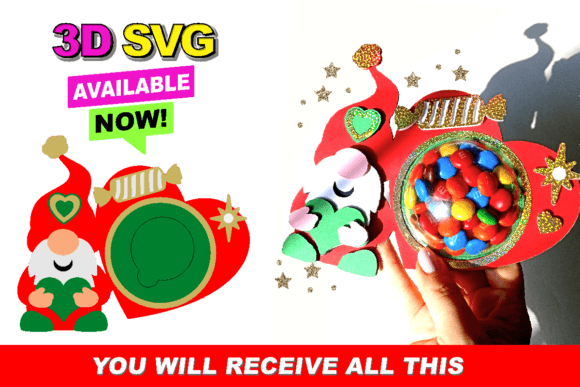
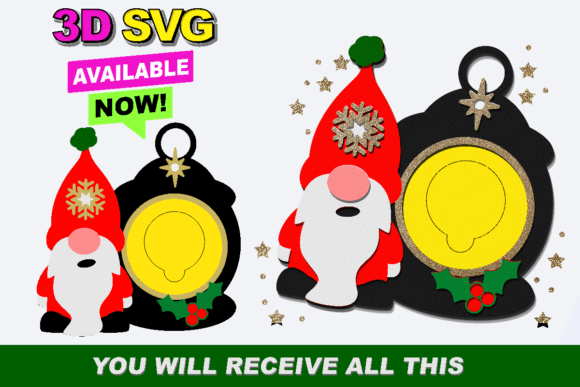
In the landscape of seasonal crafting and small-batch production, efficiency often dictates success. Whether you are a hobbyist preparing for a family gathering, an educator organizing classroom rewards, or a small business owner scaling up for holiday sales, the transition from concept to physical product requires reliable assets. The Candy Holder Gnome represents more than just a festive decoration; it is a functional component within a broader creative workflow. By utilizing a high-quality 3D SVG file designed specifically for compatibility with industry-standard software like Silhouette Studio and Cricut Design Space, creators can streamline their production process, reduce material waste, and ensure consistent output quality.
Understanding where this asset fits into your project lifecycle is crucial for maximizing its utility. The process begins long before the blade touches the cardstock or vinyl. It starts with digital preparation and file management. When you acquire a design such as the Candy Holder Gnome, which typically includes an SVG file within a zipped folder, the immediate task is organization. Effective digital asset management prevents bottlenecks later in the production phase. Extracting the files into a dedicated project directory ensures that you are not searching for resources when deadlines approach. This simple act of preparation sets the tone for a smooth execution phase, allowing you to focus on the creative and mechanical aspects of the build rather than troubleshooting missing files.
Digital Preparation and Software Compatibility
The core of integrating the Candy Holder Gnome into your workflow lies in software compatibility. The provided 3D SVG format is universally recognized by major cutting machine ecosystems, but the way you import and manipulate the file varies slightly between platforms. For users operating within the Silhouette Studio environment, the SVG import function allows for immediate layer separation. This is critical for 3D projects where different layers may require different cut settings—such as score lines for folding versus cut lines for separation. Similarly, in Cricut Design Space, the file uploads as a multi-layered image ready for assignment to specific materials.
It is important to verify your machine's capability before committing to a large batch. While the file is optimized for Silhouette and Cricut devices, users with alternative cutting machines must ensure their proprietary software supports standard SVG imports with layer retention. If your machine requires a specific conversion format, this step should be handled during the pre-production planning stage. Converting files prematurely can sometimes degrade vector quality, leading to jagged edges or failed cuts. Therefore, maintaining the original SVG integrity until the final export to your machine's native language is a best practice for quality control.
Once imported, the design phase involves scaling and customization. The Candy Holder Gnome is versatile; it can be resized to hold various treat sizes, from small chocolates to full-sized candy bars. However, resizing 3D structures requires attention to structural integrity. If you scale the design down too significantly, the tab-and-slot mechanisms that hold the gnome together may become too fragile to assemble or may not lock securely. Conversely, scaling up too much might exceed the cutting mat dimensions or the structural rigidity of the chosen material. A practical approach is to run a single test cut at your desired scale using scrap material. This "prototype" step validates the dimensions and ensures the assembly logic holds true before you commit valuable inventory.
Material Selection and Production Efficiency
The choice of material directly influences the functionality and aesthetic of the final Candy Holder Gnome. In a professional or semi-professional workflow, consistency is key. If you are producing these for sale or as uniform gifts, sticking to a specific weight and texture of cardstock ensures every unit looks identical. Heavier cardstock (65lb to 80lb) is generally recommended for 3D structures as it provides the necessary rigidity to hold the weight of the candy without bowing or collapsing. Lighter papers may require internal reinforcement or double-layering, which adds time and complexity to the assembly process.
During the cutting phase, organization on the cutting mat impacts throughput. Nesting multiple instances of the Candy Holder Gnome on a single mat maximizes material usage and reduces the number of loading and unloading cycles. However, overcrowding can lead to shifting during the cut, resulting in misaligned pieces that are impossible to assemble. Leaving adequate margins and utilizing the "mat preview" feature in your software helps visualize the layout and prevent errors. For those running high-volume batches, consider the wear on your blades. Intricate details in the gnome's beard or hat brim may dull blades faster than simple geometric shapes. Monitoring blade performance and having replacements ready prevents mid-project stoppages.
Assembly and Quality Control Protocols
Post-cutting, the workflow shifts to assembly. This is often the most labor-intensive part of the process, but it can be optimized through an assembly-line approach. Rather than building one gnome from start to finish, organize your workspace into stations: folding, gluing, and filling. At the folding station, pre-crease all score lines for a batch of gnomes. This muscle-memory repetition increases speed and ensures crisp folds across all units. Moving to the gluing station, use a consistent adhesive application method. Too much glue can cause seepage that ruins the visual appeal, while too little compromises structural stability. Quick-dry craft glue or double-sided tape strips are often preferred over liquid glue for faster processing times.
Quality control should be integrated throughout the assembly line, not just at the end. Check the fit of the tabs and slots as you assemble the first few units. If the fit is too tight, it may tear the paper; if too loose, the gnome won't hold its shape. Adjustments can sometimes be made by gently burnishing the fold lines or trimming tabs slightly, but recurring issues usually point back to the cut settings or material thickness. Establishing a standard for what constitutes a "sellable" or "gift-ready" unit helps maintain high standards. Discard or recycle units with visible defects immediately to avoid mixing them with finished products.
Strategic Applications and Long-Term Use
The utility of the Candy Holder Gnome extends beyond the immediate holiday season. For educators, these can be part of a reward system or a classroom party activity, teaching students about following instructions and fine motor skills through assembly. For marketers and brand strategists, customizing the gnome with branded colors or adding a logo tag creates a memorable touchpoint for client gifts or event favors. The 3D nature of the object makes it stand out compared to flat cards or stickers, offering higher perceived value.
From a business perspective, documenting the entire process—from file setup to final packaging—creates a standard operating procedure (SOP). This documentation is invaluable if you plan to scale operations or delegate tasks to assistants. Knowing exactly how long it takes to cut, weed, and assemble a batch of ten gnomes allows for accurate pricing and timeline estimation for future orders. Furthermore, storing the digital file and your specific cut settings in a cloud-based library ensures that you can reproduce the exact same product months or years later, maintaining brand consistency.
Ultimately, the Candy Holder Gnome serves as a case study in how digital assets translate into tangible results. By treating the SVG file not just as an image but as a blueprint for a manufacturing process, you elevate the quality of your output. The ease of cutting in Silhouette Studio and Cricut Design Space removes technical barriers, allowing you to focus on creativity and execution. Whether you are fulfilling a single order or managing a seasonal product line, the principles of preparation, compatibility testing, material optimization, and structured assembly remain constant. Integrating this tool smoothly into your routine transforms a simple craft project into a streamlined, repeatable, and professional operation.
As you move forward with your projects, remember that the longevity of your workflow depends on adaptability. Keep your software updated, experiment with new materials to see how they interact with the 3D design, and always keep a backup of your digital assets. The Candy Holder Gnome is a versatile element in your creative arsenal, capable of adapting to various needs when supported by a disciplined and thoughtful production process.