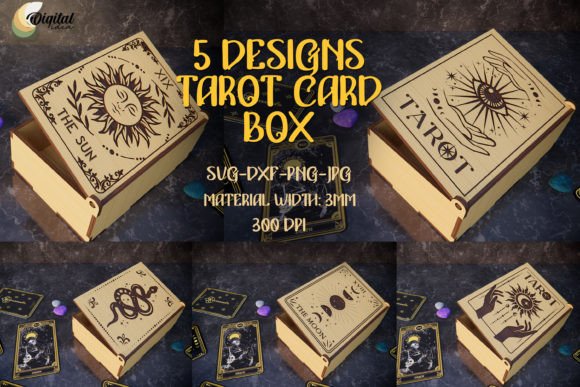
Unlocking Mystery: A Practical Guide to the Gift Box SVG Tarot Card Design
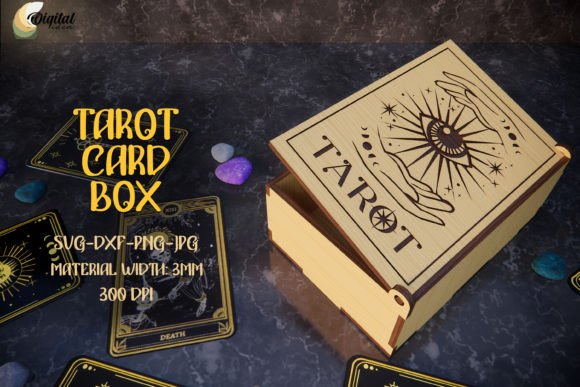
The allure of the esoteric has found a permanent home in modern crafting, blending ancient symbolism with cutting-edge technology. At the intersection of these worlds lies the Gift Box SVG Tarot Card, a digital design file that allows creators to transform flat sheets of wood, acrylic, or cardstock into intricate, three-dimensional keepsakes. Whether you are a seasoned laser cutter operator running a small business or a hobbyist looking to create a unique present for a friend, understanding the nuances of this specific design type is crucial. These files are not merely images; they are engineering blueprints that dictate how light interacts with material to create depth, shadow, and surprise. When executed correctly, a tarot card box becomes more than a container; it is an experience, often featuring 3D laser decor elements that pop out as the lid is lifted.
However, the journey from downloading a zip folder containing SVG, DXF, EPS, PDF, JPEG, and PNG formats to holding a finished product in your hands is rarely linear. Many enthusiasts stumble not because of a lack of talent, but due to overlooked technical details and common misconceptions about how these files function in a real-world setting. By addressing these pitfalls early, you can save material, time, and frustration, ensuring your final project reflects the mystical quality the design intends to convey.
Navigating File Formats and Compatibility Traps
One of the most frequent points of confusion arises immediately after purchase: which file do I actually use? A standard download package for a Tarot Card Box Laser Cut design typically includes a comprehensive suite of formats. While having options is beneficial, selecting the wrong one can lead to significant workflow disruptions. Beginners often make the mistake of importing raster images like JPEG or PNG directly into vector-based laser software, expecting clean cut lines. This approach inevitably results in poor edge quality, as the machine attempts to interpret pixels rather than mathematical paths.
To avoid this, always prioritize vector formats such as SVG, DXF, or EPS for the actual cutting process. These formats preserve the precise geometry required for interlocking tabs and delicate filigree work common in 3D laser decor. The PDF included in the folder is excellent for visualizing the layout or printing a paper prototype, while the PNG and JPEG files serve best for marketing materials or previewing the design on social media. If your laser software struggles with an SVG file due to version incompatibilities—a common issue with older machines—switching to the DXF format often resolves the problem without needing to redraw the design. Always inspect your file in the software before sending it to the machine; ensure that all paths are closed and that there are no stray nodes that could cause the laser head to make unnecessary movements.
The Critical Importance of Material Thickness and Kerf
Perhaps the most impactful variable in creating a functional gift box is the relationship between the design's slot width and your chosen material's thickness. Designers of Gift Box SVG files usually optimize their vectors for a specific range, commonly 3mm or 1/8 inch. A prevalent error among creators is assuming the design will automatically adjust to whatever material they have on hand. If you attempt to assemble a box designed for 3mm plywood using 4mm acrylic without adjusting the file, the pieces simply will not fit together. Conversely, using material that is too thin will result in a loose, wobbly structure that fails to protect the tarot cards inside.
This is where the concept of kerf becomes vital. Kerf refers to the width of the material removed by the laser beam during cutting. If you ignore kerf compensation, your joints may be too tight, requiring excessive force to assemble, which can crack brittle materials like acrylic or splinter wood. Before committing to a full sheet, perform a test cut on a scrap piece of your intended material. Measure the actual thickness with calipers, not just the labeled thickness, as manufacturing variances are common. Most professional laser software allows you to apply a global offset to account for kerf. Taking this extra step ensures that the friction fit of your box is snug enough to hold its shape but loose enough to assemble smoothly.
Design Complexity vs. Assembly Reality
The visual appeal of 3D laser decor often tempts creators to choose designs with extreme intricacy. While a highly detailed tarot box looks stunning in a render, it can become a nightmare to assemble if the tolerance levels are too tight or if the parts are too fragile for the material used. A common misunderstanding is that "more detail equals higher quality." In reality, overly complex designs increase the risk of breakage during the weeding process (removing excess material) and assembly. For beginners, it is wiser to start with a design that balances aesthetic flair with structural integrity.
Consider the end-user experience as well. If you are producing these boxes for sale, remember that your customer may need to assemble them. A design that requires tweezers and magnifying glasses to put together might receive negative feedback despite looking beautiful. Look for designs that utilize self-jigging features, where the alignment of the pieces guides the assembly process naturally. Additionally, pay attention to the grain direction of wood or the protective film on acrylic. Cutting against the grain can weaken structural tabs, while forgetting to leave the protective film on acrylic during cutting can result in scorch marks that are impossible to remove later.
Optimizing for Production and Presentation
For entrepreneurs and small business owners, efficiency is key. When utilizing a Tarot Card Box Laser Cut file for production runs, nesting—the arrangement of multiple designs on a single sheet to minimize waste—is essential. However, do not sacrifice spacing for density. Parts need adequate distance between them to prevent heat buildup, which can warp thin materials or cause flare-ups. Furthermore, consider the finishing process. A raw cut often looks industrial; sanding wooden edges or flame-polishing acrylic can elevate the perceived value of the product significantly.
Another aspect often overlooked is the interior finish. Since these boxes are intended to hold tarot cards, the interior should be smooth to prevent snagging the card edges as they are slid in and out. If the design includes internal dividers or layers, ensure they are sanded or coated if necessary. For those using the included PNG or JPEG files for marketing, ensure your photography highlights the 3D aspect of the box. Show the box open, with cards partially visible, to demonstrate functionality and depth.
Making the Right Choice for Your Project
Before downloading or purchasing any Gift Box SVG design, take a moment to evaluate your specific needs and capabilities. Ask yourself: Do I have the appropriate material thickness? Is my machine calibrated for the level of detail in this design? Do I have the time for post-processing? By answering these questions honestly, you can select a project that matches your skill level and resources. Remember, the goal is to create a object that inspires wonder, not frustration.
Ultimately, the success of a laser-cut tarot box lies in the preparation. Respect the file formats, honor the material constraints, and plan your assembly strategy. With the right approach, the zip folder you download transforms from a collection of data into a tangible piece of art, ready to house the mysteries of the tarot. Whether for personal enjoyment or commercial venture, mastering these details ensures that every cut counts and every box tells a story of craftsmanship.